Strengths
Self-Awareness: You Think You Know Yourself. Your Team Sees Something Different
Image: Belbin Estonia
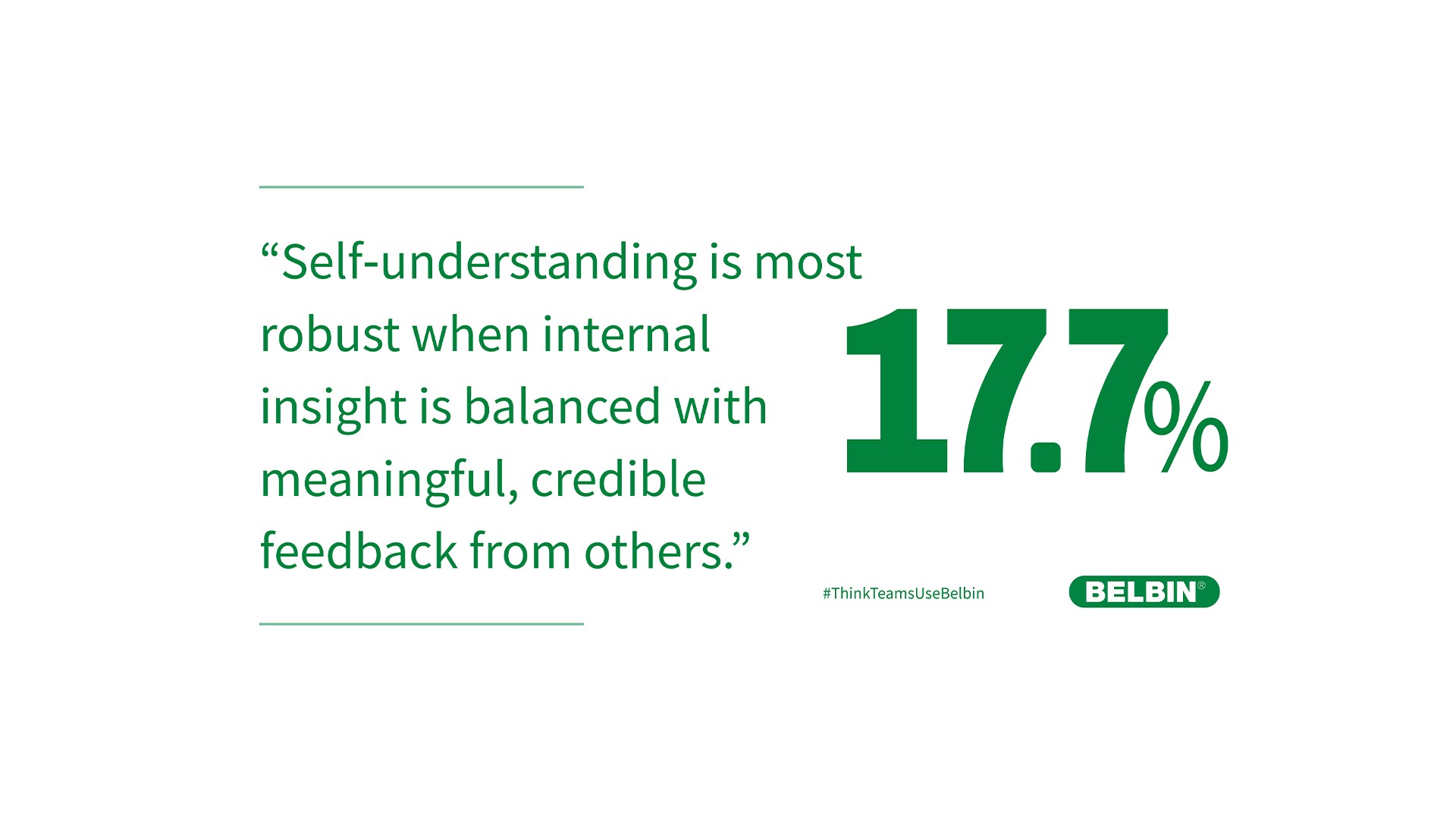
Out of 78,000 Belbin profiles, only 17.7% showed a coherent match between self-view and colleague feedback. Most people believe they know themselves well. The data says otherwise — and that gap is where every serious team development project should start.
Date Created | Date Modified
2026-04-19
|
Author
Mats Soomre | Belbin Accredited Team Coach
Share this article
Most people believe they know themselves well. The data says otherwise.
When Belbin analysed over 78,000 individual profiles from more than 30 countries, only 17.7% showed a coherent match between how people see themselves and how their colleagues see them. Tasha Eurich's research across 5,000 individuals found a similar number — roughly 10–15% of people are genuinely self-aware.
This is not a criticism. It is the starting point for any serious team development work.
Is self-awareness the same across cultures?
The 17.7% is not a Western number or an Eastern one. It holds across continents.
Broken down by region, the coherent-profile rate barely moves: Asia 18.8%, Europe 17.8%, Oceania 17.6%, Africa 16.7%, Latin America 16.2%, and lowest of all, the USA and Canada at 15.3%.
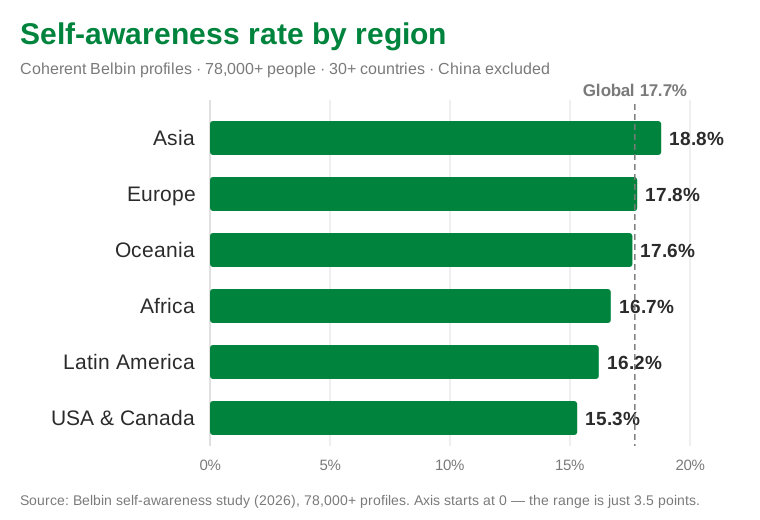
From the most self-aware region to the least, the gap is three percentage points. Self-awareness is not a cultural trait that some societies have and others lack. It is a human limit that shows up at roughly the same rate wherever people compare their self-image against what colleagues actually see.
The North American figure deserves a pause. The market that spends the most on coaching, development and assessment sits at the bottom of the table. Spending on self-knowledge and possessing it are not the same thing - and that gap is exactly what observer feedback closes.
Wherever your people sit, assume four in five are working from a self-portrait their colleagues do not fully recognise. The question is not whether the gap is on your team. It is whether anyone has shown them the data.
Why Personality Descriptions Are Not Enough
Organisations spend large amounts of time and money on personality assessments. These describe tendencies, preferences, styles. Useful background. But personality is not what your team experiences. Your team experiences your behaviour — what you do, when you do it, how often, and what effect it has on everyone else.
The distinction is practical, not theoretical. You cannot ask a colleague to change their personality. You can ask them to change a specific behaviour. You cannot give feedback on a trait. You can give feedback on something you observed in last Tuesday's meeting.
Two Kinds of Self-Awareness
Organisational psychologist Tasha Eurich distinguishes between internal and external self-awareness. Internal self-awareness is understanding your own motivations, energy sources, stress responses, and preferred ways of contributing. External self-awareness is recognising how others experience your behaviour — where their view matches yours and where it does not.
Most people develop one without the other.
A leader who knows exactly what drives them but has no idea how their team experiences their decision-making style has internal awareness without external awareness. A team member who adjusts constantly to what others expect but has lost touch with their own strengths has external awareness without internal grounding.
Both are incomplete. Development that ignores either side produces blind spots.
The Johari Window model maps this same territory — what you know about yourself versus what others know about you. The most productive development happens when feedback reduces the gap between the two.
What Belbin Measures That Others Miss
The Belbin Team Roles framework does something most assessments do not. It collects both self-perception and observer feedback, then compares the two.
The Self-Perception Inventory captures how you believe you contribute to a team. Observer Assessments capture how your colleagues experience your actual contribution. The comparison reveals one of three patterns.
A coherent profile means your self-view and your colleagues' observations broadly match. You understand your strengths, you express them visibly, and others can predict what you will contribute. What you intend to deliver and what others receive are close enough to build reliable expectations.
A discordant profile means a significant gap between your self-view and what others observe. Your behaviour may shift across contexts in ways that colleagues find hard to read. The result is unpredictability — your intentions do not reliably translate into the impact you expect. The gap stays invisible until someone shows you the data.
When this gap stays unaddressed, it becomes a source of friction — and often, demotivation. Read Before You Motivate, Remove What Demotivates
A confused profile means neither your own view nor your colleagues' feedback converges into a clear behavioural picture. Observations contradict each other. This makes it difficult for anyone — including you — to know what to expect. It signals a need for structured feedback, role clarity, and ongoing observation before meaningful development work can begin.
What This Means for Teams
A team where most people have coherent profiles operates with less friction. Expectations are accurate. People know what to ask for and what to offer. Feedback is specific, not guesswork.
A team where most profiles are discordant or confused spends energy on misunderstanding. People work harder to compensate for unpredictability. Trust builds slowly because behaviour does not match the story people tell about themselves.
The practical question is not whether your team has talented people. It almost certainly does. The question is whether those people see themselves clearly enough to contribute what they are actually capable of — and whether the team has a shared language to talk about it.
For a client's perspective on how this reframe works over 15 years, read The Team You Build Is the Company You Build
Where Development Starts
Self-awareness is not a fixed trait. It is a practice. It grows through reflection, honest feedback, and structured conversation — anchored to observable behaviour rather than abstract personality descriptions.
The sequence that works: start with individual behavioural profiles. Compare self-perception with observer feedback. Name the gaps. Then move to the team level — where do our strengths overlap, where are we exposed, and where do we misread each other?
Those gaps include strengths that have crossed the line into obstacles. Read When Strengths Go Too Far
For the complete nine-role framework, read Belbin Team Roles: The Practitioner's Guide to What Teams Actually Need
This is what Belbin makes possible. Not a label. Not a category. A starting point for the conversations that teams avoid but always need.
If 82% of people do not see themselves as clearly as they think, the question for your team is not whether this applies to you. It almost certainly does. The question is what you do about it.
Read the gap. Don't explain it away. Start with a Belbin Individual Report and ask four to six colleagues for observer feedback. The useful part is rarely what confirms your self-image. It is what interrupts it.
Frequently Asked Questions (FAQ)
What is the difference between internal and external self-awareness?
Internal self-awareness is understanding your own motivations, energy, stress responses, and how you prefer to contribute.
External self-awareness is knowing how other people actually experience your behaviour - where their view matches yours and where it does not. Most people develop one without the other. You can feel highly self-aware on the inside and still be a stranger to how you land in a room.
How do you become more self-aware?
You become more self-aware not by looking harder at yourself, but through structured feedback from the people who work with you.
The one angle you cannot see is your own behaviour from the outside, so introspection alone keeps hitting the same blind spot. Behaviour is observable - a colleague can tell you what they saw in last Tuesday's meeting. That outside view, gathered properly, turns a private self-image into something you can work with.
What does self-awareness change for a team?
Your team does not experience your personality. It experiences your behaviour - what you do, how often, and what effect it has on everyone else.
When your self-view and your team's view of you diverge, the gap shows up as friction nobody quite names. Closing it is where real team development starts: not with new traits, but with seeing the behaviour the rest of the room has been watching all along.
Is self-awareness the same as knowing your personality type?
No - self-awareness is not the same as knowing your personality type.
A personality type describes tendencies and preferences, useful background but not what your colleagues respond to day to day. Self-awareness is about behaviour: what you actually do and how it lands. You cannot give feedback on a trait or ask someone to change their personality, but you can observe and adjust a specific behaviour. That is why behavioural feedback, not a personality label, moves self-awareness forward.