Assessment
Belbin Team Roles: The Practitioner's Guide to What Teams Actually Need
Image: Belbin Estonia
Belbin Team Roles is the most established behavioural framework for understanding how teams work. After 28 years of using it, teaching it, and building a business on it, here is what I think is most important — and why I do it differently than most.
Date Created | Date Modified
2026-05-02
|
Author
Mats Soomre | Belbin Accredited Team Coach
Share this article
Belbin measures what you do in a team. Observable behaviour. Personality tests describe who you are. The difference sounds small. In practice it changes everything.
(Eesti keeles saab samal teemal siit lugeda Belbini meeskonnarollid « Belbin Eesti)
In 2005, I asked my wife what she thought of the Belbin methodology. She is a Monitor Evaluator. She questions everything. She says no to most ideas.
She looked me in the eye and said: "Belbin is very good. Do it tomorrow."
That was the moment I knew. When your home sceptic — the person trained by life to spot weak arguments — says go, you go. I booked my accreditation course in Cambridge within days. The week I was supposed to travel, a bomb went off at King's Cross station in London. I called Belbin UK on the Friday before, delicate and polite: is it worth coming? They said come. Everything works. We are amazed ourselves.
That is how my life with Belbin started. Twenty years later I have trained more than 20,000 people across 1,500 trainings and workshops. Estonia is the most Belbinised country in the world per capita. That is partly my doing.
Along the way, I became the first Belbin distributor worldwide to complete the Belbin Accredited Team Coaching programme. The credential is recent. The work it describes — practitioner interpretation, team coaching alongside the methodology — is what I have been doing for two decades.
This article is what I wish more practitioners would explain properly. What Belbin is. Why it works when other tools don't. Why the way I use it is different. And why the part most people overlook — the manageable roles, the observer data — is where the real value sits.
What Belbin Team Roles Measures
Most people hear "Belbin" and think personality test. It isn't. That distinction is not a technicality. It is the entire point.
Personality tests describe who you are. Stable traits. Inner tendencies. Introvert or extrovert. Thinking or feeling. Useful for self-reflection. Less useful when your team has a deadline on Friday.
Belbin measures what you do in a team. Observable behaviour. How you contribute when work is happening. How you respond when pressure is on. What your colleagues watch you do, week after week, in real situations.
The difference sounds small. In practice it changes everything.
Behaviour is specific. You can give feedback on it. You can develop it. You can ask someone to do something differently on Tuesday and see whether they did on Thursday. You cannot do any of that with personality.
This is what the Henley Management College research discovered in the 1970s. Dr Meredith Belbin and his team ran business simulations for nine years with teams from Henley's management programmes. They tried every combination. Teams of the smartest people. Teams of similar personalities. Teams designed around functional roles. Then they watched what happened.
The result was surprising. The teams of brilliant people — full of strong intellects, good analysts, high achievers — mostly underperformed. They argued. They competed. They failed to coordinate. The teams that performed consistently were not the ones with the brightest individuals. They were the ones with the right behavioural mix.
The first role Belbin's team identified was the Implementer - disciplined, organised, reliable. But teams of pure Implementers produced careful work without creative spark. So the researchers deliberately "planted" individuals with a creative disposition into other teams to see what would happen. The new role was named for the act of planting. One by one, the other roles emerged: Monitor Evaluators for impartial judgement, Resource Investigators to connect outwards, Shapers to push through resistance, Teamworkers to hold the team together. Specialist arrived later, after Belbin began applying the research in industry where deep expertise turned out to be its own distinct contribution. Nine roles in total. Each one useful. Each with a predictable trade-off. No single role better than another. Teams succeeded when the mix fit the task.
For the research context and how this connects to more recent findings, read *Google Spent Years Researching What Makes Teams Work. Belbin Knew the Answer Decades Earlier.*.
The Nine Team Roles
Belbin groups the nine roles into three clusters by the kind of contribution each makes: thinking roles that shape ideas and judgement, action roles that drive work to done, and people roles that hold the team together.
No role outranks another, and no one is only a single role - most of us carry two or three we play naturally, plus a couple we can stretch into when the team needs them. The mix is what decides performance: a team that covers all three kinds of contribution usually outperforms a team of similar, brilliant individuals who all think the same way. Here is what each of the nine does - and the allowable weakness that comes with every strength.
Thinking Roles
Team Role | Strengths and allowable weaknesses |
|---|---|
 | Plant (PL)The creative, imaginative, unorthodox thinker. Plants generate ideas others don't see. They solve problems in unexpected ways. They are often quiet in meetings and then say something that changes the direction of the project. Allowable weakness: they ignore details and can be too preoccupied to communicate effectively. The absent-minded professor is not a stereotype. It is the price of deep creative absorption. |
 | Monitor Evaluator (ME)The logical, strategic, analytical judge. Monitor Evaluators see the flaw in the plan before anyone else does. They test arguments against evidence. They do not rush. They slow decisions down so teams do not walk off cliffs together. Allowable weakness: they can be unenthusiastic and slow to commit. The team that has no Monitor Evaluator is the team that runs straight into predictable disasters. |
 | Specialist (SP)The dedicated, single-minded expert. Specialists bring depth. Deep knowledge in one specific area. They are the person you need when the problem requires real technical expertise. Allowable weakness: they focus on a narrow front and can overlook the bigger picture. Their expertise is the point. Asking them to generalise defeats the purpose of having them. |
Action Roles
Team Role | Strengths and allowable weaknesses |
|---|---|
 | Shaper (SH)The challenging, driven, high-energy pusher. Shapers make things happen. They challenge complacency. They push through obstacles. They thrive on pressure and they apply it to others. Allowable weakness: they provoke, can be abrasive, and sometimes hurt feelings in pursuit of results. A team with no Shaper tends to drift. A team with too many Shapers tends to implode. |
 | Implementer (IMP)The disciplined, reliable, practical doer. Implementers turn ideas into action. They create systems. They follow through. They deliver what they said they would deliver, when they said they would deliver it. Allowable weakness: they can be inflexible and slow to adapt when circumstances change. They do not improvise well. What they do superbly is execute. |
 | Completer Finisher (CF)The careful, conscientious, detail-focused finisher. Completer Finishers catch the mistakes everyone else missed. They worry about what could go wrong. They check and double-check. They deliver on time because they do not leave anything half-done. Allowable weakness: they worry unduly and struggle to delegate. When a Completer Finisher says something is ready, it is ready. |
People (Social) Roles
Team Role | Strengths and allowable weaknesses |
|---|---|
 | Co-ordinator (CO)The mature, confident, delegating leader. Co-ordinators clarify goals. They see the whole team. They know who is best placed to do what, and they delegate accordingly. They hold meetings that produce decisions. Allowable weakness: they can be seen as manipulative and may delegate work they should do themselves. A Co-ordinator makes the team greater than the sum of its parts. |
 | Teamworker (TW)The cooperative, perceptive, relationship-building listener. Teamworkers hold the team together. They read the room. They smooth friction. They make sure people feel heard. They often do the quiet work that keeps collaboration functioning. Allowable weakness: they can be indecisive in crunch situations and avoid conflict that should be had. Remove a strong Teamworker from a team and watch the cracks appear. |
 | Resource Investigator (RI)The outgoing, enthusiastic, opportunity-spotting connector. Resource Investigators are the team's external interface. They network. They bring in ideas from outside. They know who to call. They start strong and bring energy to new things. Allowable weakness: they are over-optimistic and lose interest once the initial enthusiasm has passed. They open doors. Someone else has to walk through them. |
Why Scepticism Is a Strength
Here is an exercise I have run in hundreds of trainings. I ask a simple question.
Is scepticism, as one trait among many in a person — more of a positive trait or a negative trait?
Most people don't want to answer. Of those who do, most say "it depends on the situation." True in some ways, but at the attitude level I am not satisfied with that. A few direct people say it is negative. And very few, after a short thinking pause, say it is a positive trait.
I agree with the last group. And then the real work begins.
Scepticism in a team is not pessimism. Pessimism is emotional — a general negativity about possibilities. Scepticism is analytical — a demand for evidence before commitment. The sceptic does not say no to your idea. The sceptic asks how it will work, what it will cost, whether it has been tried before.
If you want to move fast, the sceptic is in your way. If you want to avoid expensive mistakes, the sceptic is the most valuable person in the room.
This is what a Monitor Evaluator contributes to a team. Logic over enthusiasm. Facts over feelings. Alternatives, impact, percentages, cause-effect.
The mistake most leaders make is treating the sceptic as a problem to manage. The sceptic is the team's insurance policy. The question is not how to silence them. The question is whether you trust them enough to give them decision authority when the decision needs to be sceptical.
I once delivered a training where the organiser was not present. Afterwards I told her that two colleagues had spoken with me extensively during the first break. She laughed. "That man doesn't talk," she said. "What do you mean he doesn't talk? We were standing there almost the entire break."
His Belbin profile was strong Monitor Evaluator. The team's analyst. The person they thought was quiet was their strongest sceptic — doing exactly the behavioural work the team needed. At the end of the training he said something I have not forgotten: "Mats, it was very good that you established right at the beginning that scepticism is a positive trait."
Why teams need to trust their sceptics — and why trust itself is the foundation underneath all of this — is in *Trust Is a Decision. Everything Else Follows.*
The Part Most Tools Cannot Reach
Most assessment tools ask one question: how do you see yourself?
You answer. The tool processes your answers. It produces a profile. That profile describes what you told the tool. Nothing more.
Belbin asks two questions. How do you see yourself — and how do four to six colleagues see you?
The self-perception inventory captures what you believe about your own behaviour. The observer assessments capture how your team experiences that behaviour. The comparison is where the real work happens.
Research across more than 78,000 Belbin profiles from 30+ countries found that only 17.7% of people are genuinely self-aware — meaning their self-view broadly matches what their observers report. The other 82% are operating on assumptions about their own behaviour that their colleagues do not share.
Most of those assumptions are not wildly wrong. But the gaps carry real cost. The person who sees themselves as collaborative but comes across as dominating. The person who sees themselves as decisive but is experienced as impulsive. The person who sees themselves as thorough but is perceived as slow. These gaps are not character flaws. They are behavioural information no self-report test can surface.
Without observer data, a Belbin profile is interesting. With observer data, it becomes usable.
The full self-awareness argument is in *Self-Awareness: You Think You Know Yourself. Your Team Sees Something Different.*.
What the Belbin Team Role Inventory Actually Is
People often ask me to send them "the Belbin test." There is no single test. There is the Belbin Team Role Inventory, and it works differently from anything people expect.
The Inventory is not a questionnaire you sit and tick in five minutes. It is two instruments that work together. The Self-Perception Inventory is the part you complete yourself — around twenty minutes, asking how you contribute, how you behave under pressure, what you do when work is happening around you. On its own, that is one half of the picture. The half you already believe.
The second instrument is the Observer Assessment. Four to six colleagues complete a short version about you — five to six minutes each. They are not guessing at your personality. They are reporting what they have watched you do. The Inventory combines both sources into one report, and the comparison between them is the part that does the work.
This is what separates the Belbin Team Role Inventory from the personality questionnaires it gets confused with. Myers-Briggs asks you about you. DiSC asks you about you.
The Belbin Team Role Inventory asks you about you and then asks the people who work with you whether they see the same thing.
Most of the time, they do not — and the gap is the most useful information in the report.
The output is not a label. It is a profile across all nine roles, showing your preferred roles, your manageable roles, and your least-preferred roles, with your self-view and your observers' view set side by side. The numbers are percentiles, not scores out of ten — they tell you where your behaviour sits relative to a large reference population, not whether you "passed."
One practical note, because it comes up every time.
The Belbin Team Role Inventory is not free, and the free "Belbin tests" floating around the internet are not Belbin. They are personality quizzes wearing the name.
The real Inventory runs through the official Interplace system, includes the observer data, and produces a report a practitioner can actually work with. The difference is the observer assessment. Without it, you have a self-report quiz. With it, you have behavioural information your team can use on Monday.
Manageable Roles: The Hidden Potential Most Reports Never Surface
Every Belbin report shows three categories of roles.
Preferred roles — two or three roles where you naturally excel. These are your primary contributions to any team.
Manageable roles — two or three roles you can perform adequately but not naturally. These take more effort. They are not your strengths, but you can do them when circumstances require. On the costs that come with every strength — the allowable weakness behind each role — see Let's Talk About Weakness.
Least-preferred roles — two or three roles that drain your energy and produce poor results. Forcing you to operate primarily in these leads to stress and eventual burnout.
Most people read their report and focus on the preferred roles. That is a mistake. The manageable roles are often where the most interesting development sits.
Why? Because manageable roles represent capacity you already have but have not yet fully used. Your strongest two or three roles are what you bring without thinking. Your manageable roles are what you bring when the team needs it — with effort, but genuinely.
The practical implication is strongest for younger professionals. Early in a career, you may not yet know where your real strengths sit. You may be doing work that someone assigned to you rather than work that fits your natural pattern. A Belbin profile helps you see the difference between what you happen to be doing and what you are suited for. The manageable roles often reveal possibilities the person had not considered.
I have read thousands of Belbin profiles. I still find it remarkable how often people underestimate their own strengths and overestimate their weaknesses. The profile does not tell you who to become. It shows you who you already are — and helps you use that with more clarity.
Why Balance Beats Brilliance
The Henley research proved something counterintuitive. Teams built around balanced behavioural mix outperformed teams built around brilliant individuals. Every time.
The reason is simple. Every strength has a shadow. Plants are creative but absent-minded. Shapers drive but can be abrasive. Monitor Evaluators analyse but commit slowly. Teamworkers connect but avoid confrontation. Implementers deliver but resist change.
A team of Plants generates brilliant ideas nobody implements. A team of Shapers fights itself to exhaustion. A team of Monitor Evaluators never commits to anything. A team of Implementers executes yesterday's plan perfectly while the market moves on. The pattern of strengths overplayed under pressure — and how teams recognise it before damage is done — is the subject of When Strengths Go Too Far.
Balance is not about having all nine roles represented in equal measure. Balance is about adequate coverage over time — does the team reliably generate ideas, evaluate them, converge on decisions, execute, and finish well? And fit to context — a crisis-response team needs different emphasis than a research lab.
My job is to see where the team is covered and where the gaps sit. Then to decide whether to bring in new people, develop manageable roles in existing members, or redesign the work so the current mix produces better outcomes.
Why Belbin Works When Other Tools Fail
There are dozens of team assessment tools on the market. Most focus on personality. Most ignore observers. Most produce labels that stick to people.
Belbin works because it does the opposite. It measures behaviour, not personality. It includes observer data, not just self-report. It describes contributions, not categories.
There is one more reason it works. It gives teams a shared language.
Once a team has been through Belbin properly — everyone with a report, everyone's observers surveyed, a facilitator helping the team interpret the patterns — the language changes. The person who keeps asking for more evidence is not being difficult. They are being a Monitor Evaluator, and the team needs what they contribute. The person who keeps opening new directions is not scattered. They are being a Plant, and the team needs that too.
This changes difficult conversations. Instead of "you always slow us down," the feedback becomes "your Monitor Evaluator caution is valuable when we have time for analysis, but we need you to switch modes when decisions are urgent." Instead of "you never finish anything," it becomes "your Plant instinct keeps opening possibilities — can you commit to closing the current one before opening the next?"
Specific. Behavioural. Workable. That is what makes Belbin different. This is also why the label "difficult person" rarely survives a proper Belbin conversation — Difficult People Don't Exist.
What Makes My Approach Different
Belbin is used by practitioners worldwide. Most position themselves inside the Belbin brand — certified consultants delivering standardised interpretations. I do that work too but …
… I do it differently.
Soomre is the brand. Belbin is the tool. My approach is strengths-based, behaviour-first, and direct. I do spend time on Belbin theory to get people on the same page and several hours on what the data means for this specific team, in this specific context, facing this specific situation and people.
Standard Belbin output gives you nine roles and some percentiles. My Team & Leadership Dynamics reports give you practitioner interpretation on top of that data — narrative analysis, pair chemistry, team-level patterns, and coaching-ready recommendations. Same data every consultant can access. Different interpretation.
The other thing I do differently is expand the audience. I work with clients who already know Belbin and with leaders and teams who have never heard of it. That is the harder work. It means turning someone from curiosity to commitment in one conversation. It means earning trust before the methodology can do its job.
I am Belbin Estonia. Accredited since 2005. First Belbin distributor worldwide to complete the Belbin Accredited Team Coaching programme. I have permission, authority, and methodology credentials. What I sell is something else.
Same data. Different interpretation.
Where to Start
If anything in this article made you curious about your own behavioural pattern, the next step is practical.
You complete the self-perception inventory online — about twenty minutes. You invite four to six colleagues to complete short observer assessments — five to six minutes each. When the observer feedback is in, your full Belbin report is generated.
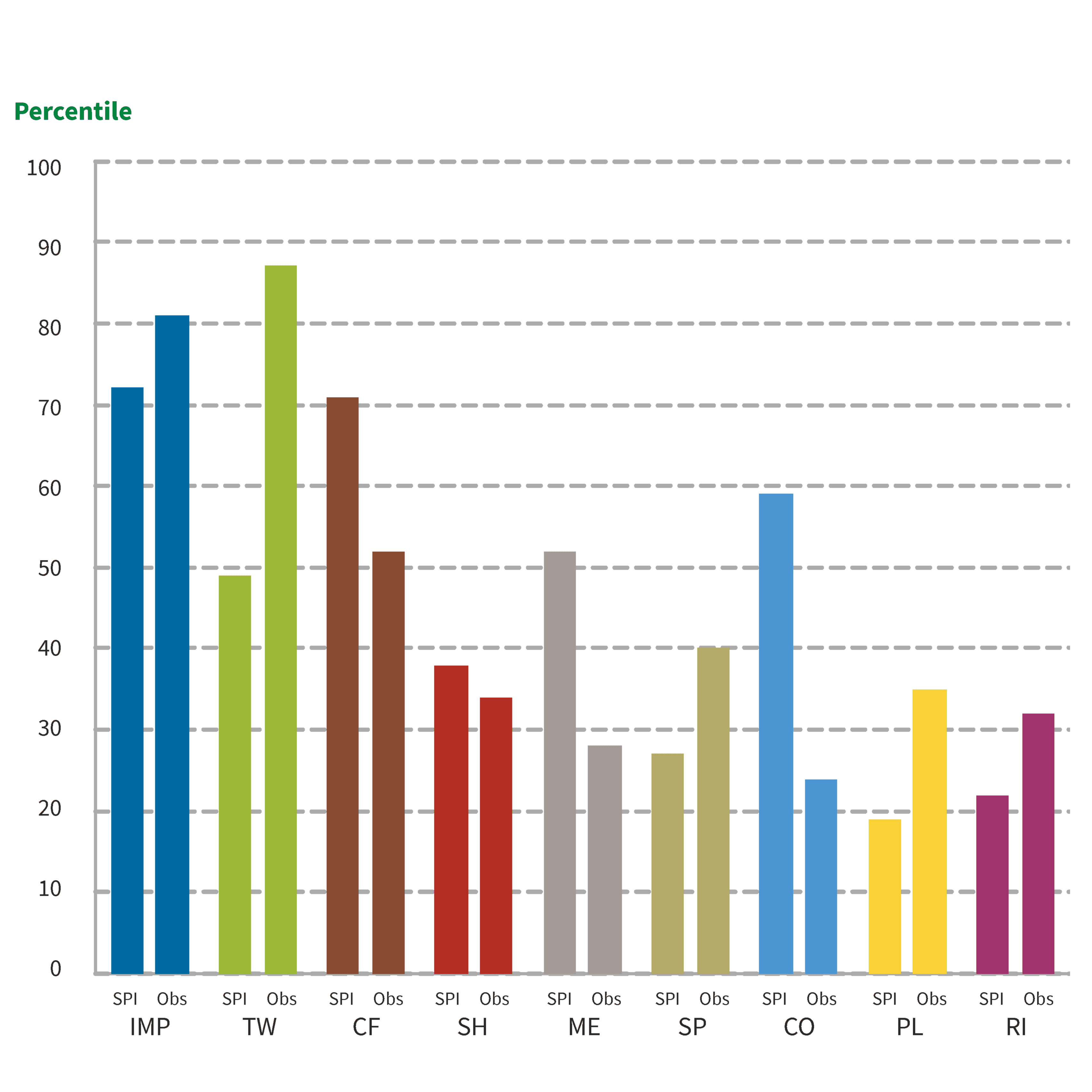
The report shows your preferred roles, your manageable roles, your least-preferred roles. It shows where your self-view (SPI) matches observer feedback (OBS) and where it diverges. It gives you observer words — the specific language your colleagues used to describe your contribution.
For individuals, the report alone changes things. For teams, the team-level analysis shows where the strengths overlap, where the gaps sit, and what the team needs to deliver on its goals.
For those who want practitioner interpretation layered on top of the data — the narrative, the pair chemistry, the coaching recommendations — that is where Team & Leadership Dynamics by Soomre comes in.
The framework is not the destination.
The conversations it makes possible are. After 28 years, the pattern is clear. Teams that go through Belbin properly stop arguing about who someone is and start working with what each person does.
Start with your own pattern.
Complete the Self-Perception Inventory. Invite four to six colleagues for observer feedback. Read the gap before you explain it away. That is where Belbin starts to work.
Frequently Asked questions (FAQ)
What are the nine Belbin Team Roles?
The nine Belbin Team Roles are Plant, Resource Investigator, Co-ordinator, Shaper, Monitor Evaluator, Teamworker, Implementer, Completer Finisher and Specialist - each a distinct behavioural contribution to a team. They group into three clusters: Thinking roles (Plant, Monitor Evaluator, Specialist), Action roles (Shaper, Implementer, Completer Finisher) and Social roles (Co-ordinator, Teamworker, Resource Investigator). Most people bring two or three naturally, and a Belbin assessment shows which.
What's the difference between Belbin and a personality test?
The difference between Belbin and a personality test is what each measures: a personality test describes who you are, while Belbin measures what you do in a team. Personality tests capture stable traits from self-report; Belbin captures observable behaviour and adds observer assessments from four to six colleagues, which no personality test does. Behaviour can be developed and given feedback on; personality cannot. That is what makes Belbin usable for teams, not just self-reflection.
What is an allowable weakness in Belbin?
An allowable weakness in Belbin is the unavoidable shadow of a strength - every role has one. Plants are creative but absent-minded; Shapers drive results but can be abrasive. The point is not to fix the weakness but to recognise it as the price of the strength, design the team to cover it, and stop punishing people for the cost of doing what they do well.
How does the Belbin observer assessment work?
The Belbin observer assessment works by adding the colleague view to your own. You complete a twenty-minute Self-Perception Inventory, then four to six colleagues each spend five to six minutes rating your behaviour. The report compares the two: where they match, self-awareness is confirmed; where they diverge, you gain behavioural information no self-report can surface. Across 78,000+ profiles, only 17.7% of people proved genuinely self-aware.
Why do balanced teams outperform teams of brilliant individuals?
Balanced teams outperform teams of brilliant individuals because behaviour, not intellect, decides how a team functions - a finding from Belbin's nine-year research at Henley Management College. Teams of high-intellect people argued, competed, and failed to coordinate. Every strength has a shadow: a team of Plants generates ideas nobody implements; a team of Shapers fights itself to exhaustion. Balance means adequate coverage of thinking, action, and people contributions, fitted to the team's context.
What are preferred, manageable and least-preferred roles?
Preferred, manageable and least-preferred roles are the three categories every Belbin report sorts your behaviour into. Preferred roles are the two or three you bring naturally; manageable roles you can perform adequately with effort; least-preferred roles drain your energy and produce poor results if you lead with them. Manageable roles are the most overlooked - capacity you already hold and can deploy when the team needs it.
Sources
- Belbin, M. Management Teams: Why They Succeed or Fail (1981, 2010)
- Belbin, M. Team Roles at Work (1993, 2010, 2022)
- Henley Management College research programme (1969-1978)
- Belbin UK self-awareness study across 78,000+ profiles