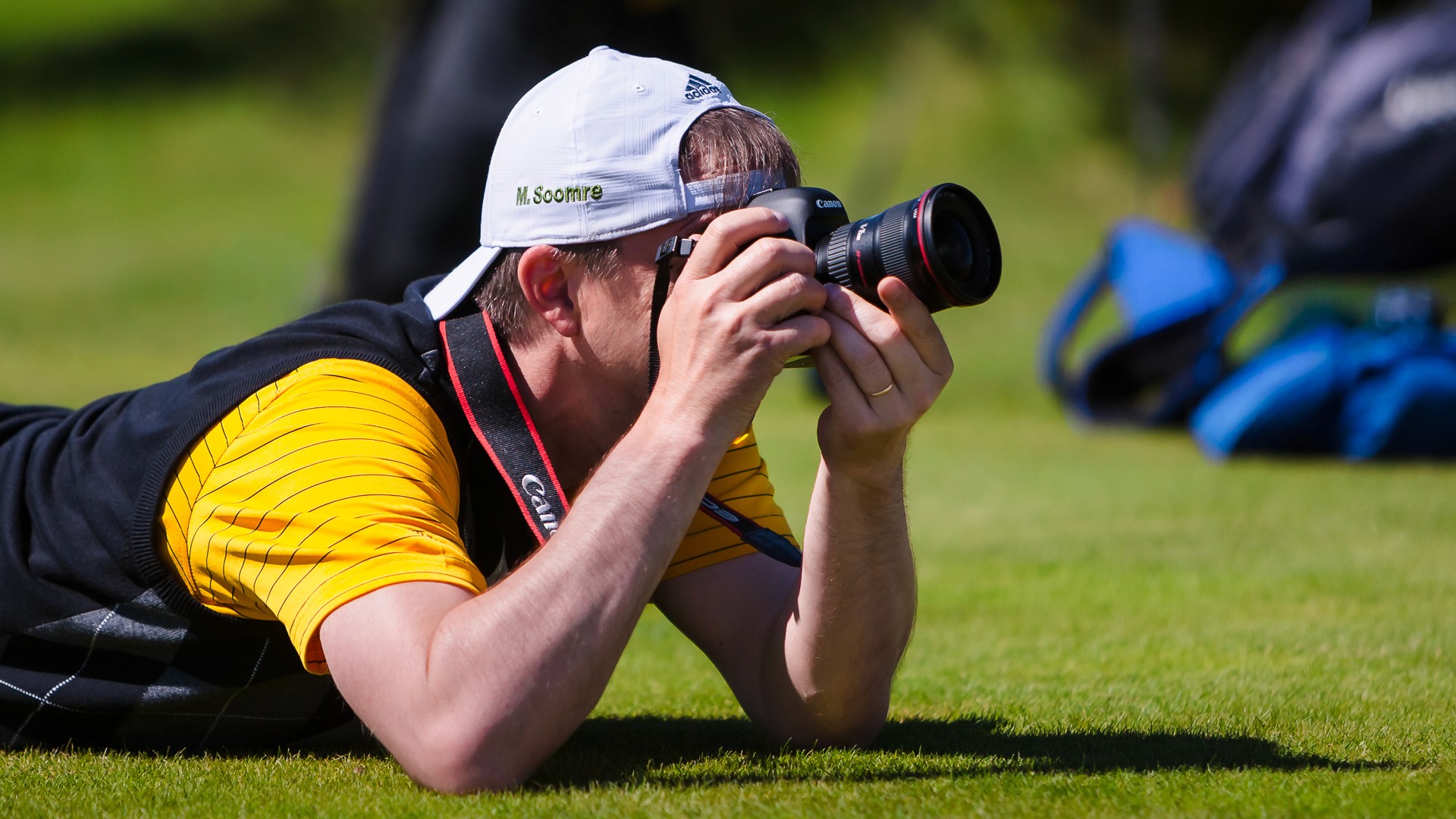
I have photographed since the late 1970s, more seriously since 2004. I have worked with developing leaders and teams since 1998. The two practices are not separate. The camera has taught me much of what I know about teams — and Mari Hütsi's story is one of many that explains why.
Date Created | Date Modified
2026-04-26
|
Author
Mats Soomre
Share this article
“Golf is your love. Golf photography is mine.”
Mats Soomre
Photography Made Me a Better Coach
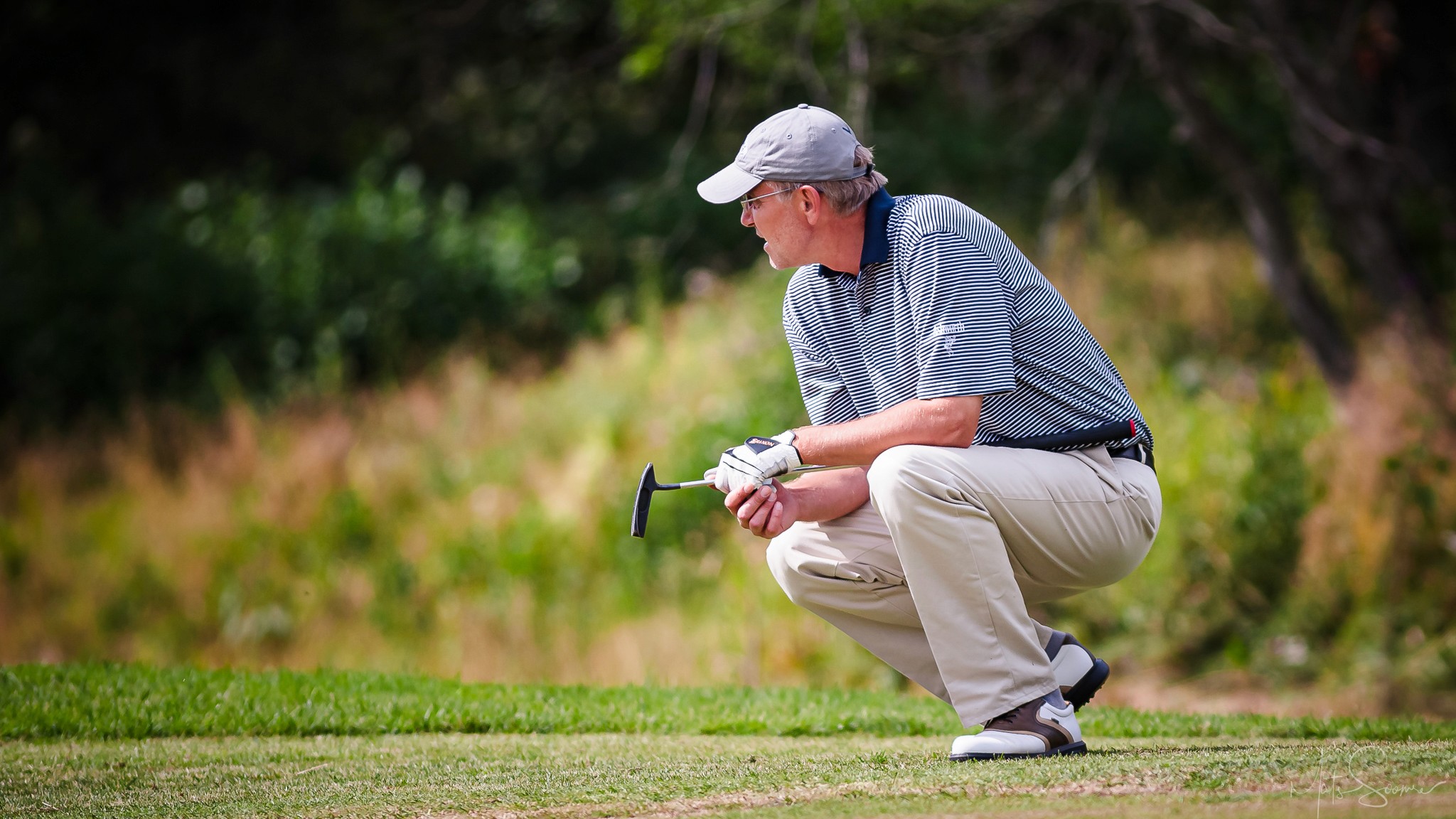
Suido Suursalu at Niitvälja Golf Center, 2007. Photo by Mats Soomre. From the first season I photographed golf seriously.
Photography taught me to see light. Coaching taught me to see people. The same instinct runs both.
Search engines confuse me. One says I am a renowned golf photographer from Estonia. Another says I am a Belbin Accredited Team Coach with 28 years of practitioner experience. Both are right. The two have never been separate.
I have been photographing since the 1970s and coaching teams since 1998. The camera and the workshop are different rooms. The instinct is the same.
A Smena at nine years old
My father handed me a Smena 2 in the mid-1970s — the proper one, in the leather case, not the later Smena 8M — and said: “Boy, take a photograph.” I did. It was interesting.
What stayed with me from that decade: the darkroom, the red light, the developer trays, the smell of fixer, the moment the image rises through the paper. Photography was chemistry before it was anything else.
Then it went quiet. I shot family snapshots through the late 1980s and 1990s and not much more. I was a software engineer, then the CEO of a computer factory. The camera stayed in a cupboard.
Two careers, one decision
In 1998 I left IT for leadership training. Best professional decision of my life. I looked at where my curiosity was strongest and went there. Margit said go. I went.
By 2000, when digital cameras finally became serious tools, I rediscovered photography from a different angle. Two things I knew well — photography and computers — could now be the same thing. My first digital photographs were 2 megapixels. I have kept them.
By the early 2000s I had been training teams for two years and photographing seriously again for one. Both grew up at the same time. Neither was the side project of the other.
Why golf
Photo: Mats Soomre
I have played golf at Niitvälja Golf Centre since the late 1990s. In 2007 I noticed something curious: nobody in Estonia was making proper golf photographs to be seen in web. Tournaments happened, players competed, and there was almost no visual record.
So I started.
If I had spent as many hours practising golf as I have spent photographing it, I would be a better player. I have a hole-in-one, several cups, and a handicap of 14 — competent club-level. Adequate. The photography became the more serious craft.
What made it work was that I was already a player. Golf photography is unusual because the photographer stands inside the field of play, not on its edge. You are part of what is happening. If you do not understand the rules, the etiquette, the rhythm of a round, you will either disturb the players or get hit by the ball. In one season thirteen golf balls came at me hard enough to be dangerous.
Years ago a well-known Estonian photographer arrived at Niitvälja to teach a how to photograph golf workshop. His first question, walking out of the clubhouse: “Tell me, how does this golf game actually work?” I did not stay for the rest.
Caption: Determination. Niitvälja, August 2025. #MomentsBySoomre
The ten thousand hour rule
There is a rule in photography — ten thousand hours of work before you start to make good photographs reliably. Some people are quicker. Most are not.
My first two years of serious work produced a handful of decent images. Looking back at them now is humbling. I knew what I wanted. I did not yet have the eye to get there.
The half of photography that most people miss is the time at the computer. For every hour in the field there is roughly an equal hour selecting, processing, captioning, archiving. The camera is the smaller half of the job.
Photography is like golf
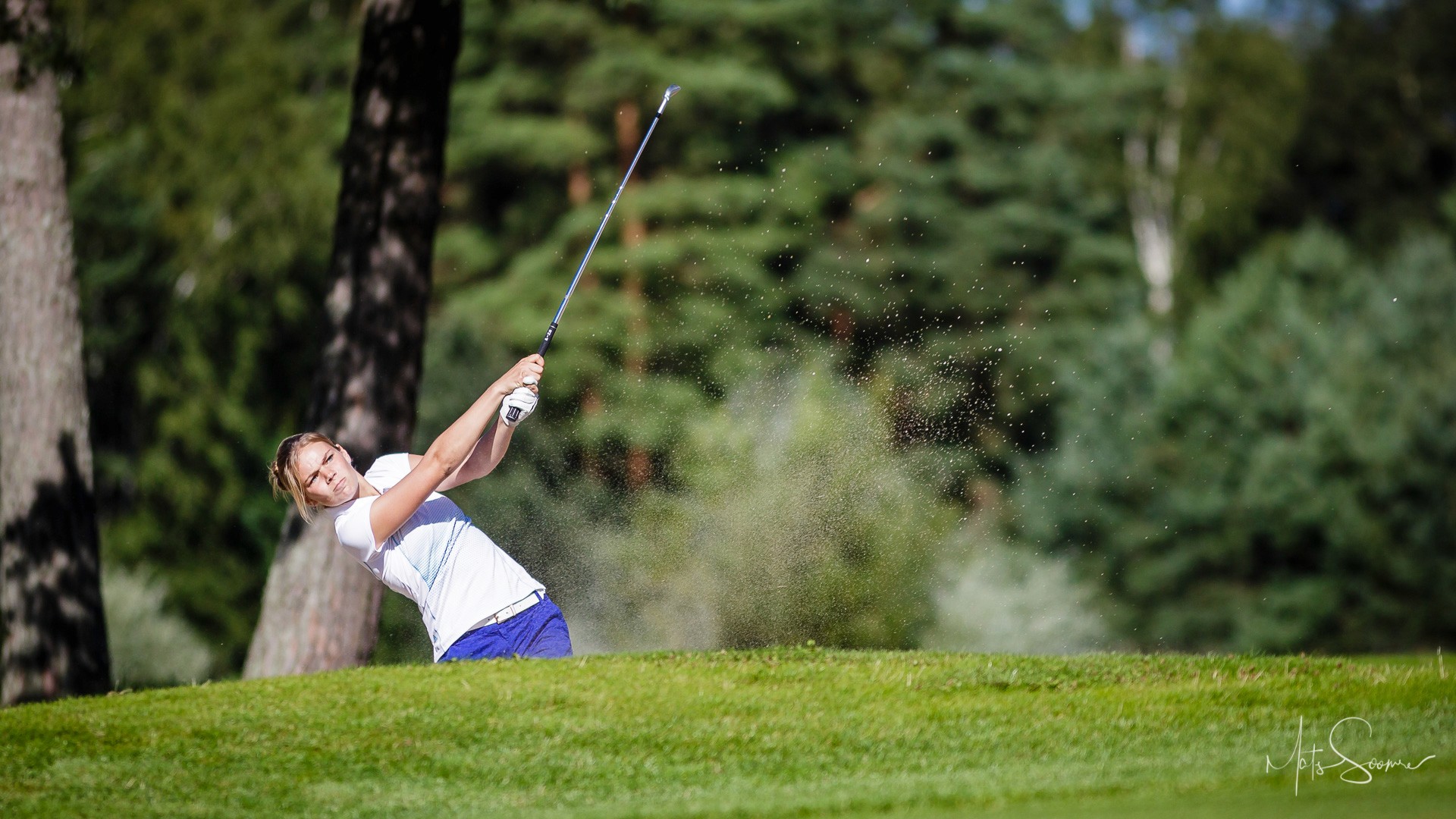
Mari Hütsi at Niitvälja Golf Center, 2015. Photo by Mats Soomre.
Both are crafts where most attempts do not work.
The good golfer rescues the next shot and counts every stroke on the card. The good photographer rescues the next frame and deletes the rest. There is one important difference: the photographer can improve the result after the shutter. The golfer cannot.
What photography taught me about teams
Mari Hütsi told me a story I have not forgotten.
She had recently been named Best Female Golfer in Estonia. She had also seen one of my photographs of her, taken during a difficult round. The photograph showed her looking heavy, defeated, almost depressed.
She told me: “Mats, when I saw that photograph, I thought — I am not a sad and depressed person. The opposite. I am cheerful and energetic. But I saw the photograph and I realised: when my game went badly, I was very emotional, and I let a bad result affect me visibly.”
That photograph changed how she played. She had the data inside herself the whole time. She had not seen it from the outside until the camera showed her.
This is what I do with teams. I am not the photograph. I am the person holding the camera — pointing colleagues at the data their team is already producing, and helping them see what they have not yet noticed about themselves.
Belbin Team Roles works the same way. The full Belbin profile combines self-perception with Observer Assessment from four to six colleagues. The two sources rarely match. The gap between them is where the most useful coaching conversations begin.
A photograph and an Observer Assessment do the same job. They show you what the room saw.
What makes a good photograph
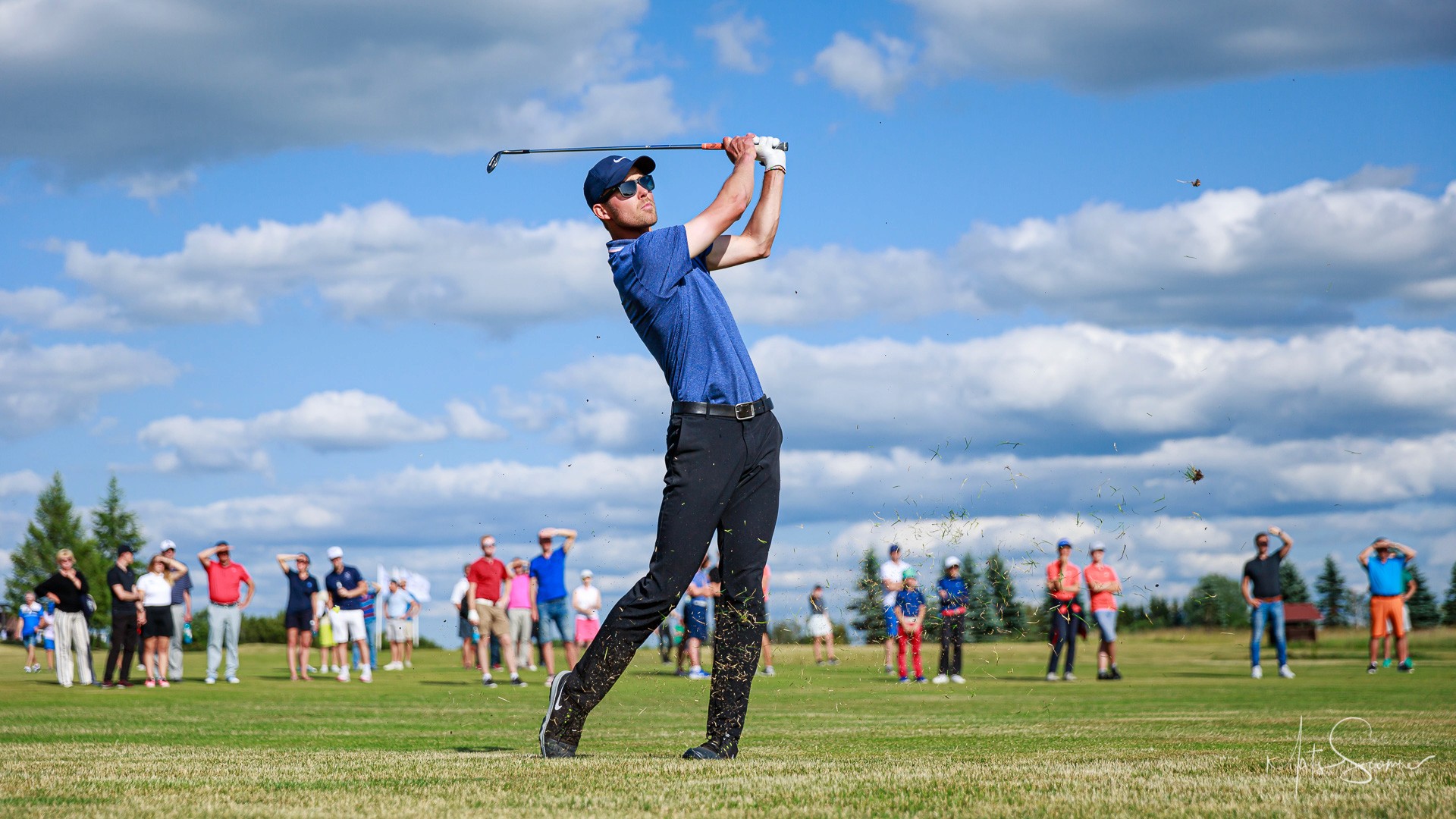
Mark Suursalu at Niitvälja Golf Center, 2019. Photo by Mats Soomre. Niitvälja Karikas.
Light. That is the answer.
The technique helps. The lens helps. The sensor helps. None of these makes the photograph. The photograph is made by the photographer's ability to see the light as it is in this moment. As it is, not as it usually is.
In team coaching this skill has a different name. It is the ability to see the people in the room as they are, not as the org chart describes them or as they describe themselves.
You learn to see light by photographing tens of thousands of frames. You learn to see people by working with hundreds of teams. There is no shortcut for either.
You won't find a single quick snap in Mats's gallery. Every frame holds the emotion of the captured moment — joy, concentration, fear, worry, frustration. You feel it directly.
Sander Vallaots, Estonian Tour
How to be photographed
These started as advice for Estonian golfers in 2023. They translate.
If you feel there are no good photographs of you, talk to the photographer. It is probably a coincidence, fixable.
When you make a good shot, show the joy. The photographer feels your good shot almost as much as you do.
Be patient. Good photographs take time in the field and equal time at the computer afterwards.
If something concerns you, talk to the photographer. Photographers are people. Players slice and hook and chunk. Photographers also miss.
If a photographer is interrupting your shot, say so before the swing, not after.
Do not take a bad shot out on the photographer. The photographer did not cause it.
Photographers cannot read minds. If you want something specific, say so.
If you use the photograph, credit it: Photo by Mats Soomre · soomre.com — with #MomentsBySoomre and a tag.
A kind word costs nothing. Photography on a golf course is mostly volunteer enthusiasm.
Cappuccino is welcome.
The full archive is at moments.soomre.com. Direct contact is mats@soomre.com.
Where the photographs live
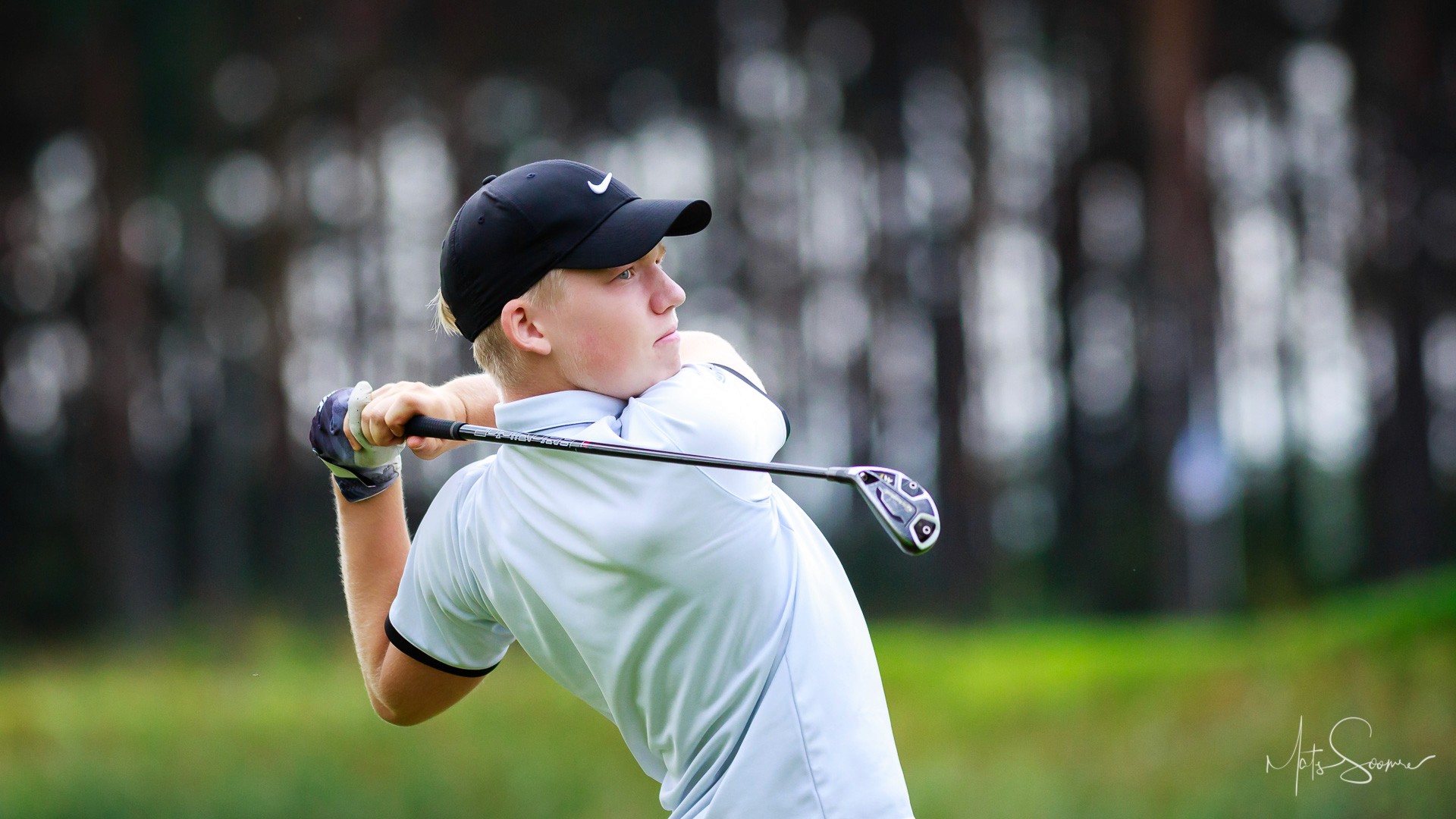
Mikk Soomre at Pärnu Bay Golf Links, 2019 Photo by Mats Soomre.
Selected photography galleries are hosted at moments.soomre.com and fullsize Golf Megagallery at golf.soomre.com. The golf archive (not all published on site) goes back to 2007. The wider #MomentsBySoomre work is also there.
Photography is a creative practice. It is not part of the commercial coaching, training, or assessment offer at Training & Team Coaching by Soomre. Clients sometimes ask whether I will photograph their event. The answer is rarely yes. The camera and the coach should not show up in the same room. They use different parts of attention.
When the camera comes out, I am paying attention to the light. When I am coaching, I am paying attention to the people.
Once you start looking at Mats's golf photo page, you stay. Golf is contagious — but Mats has clearly been infected with the rare strain of golf photography for years now. I hope he doesn't recover any time soon.
Rein Raudsepp, Saaremaa Golf & Country Club
What stays the same
The same instinct that made me pick up the Smena at nine years old, and the same instinct that pulled me out of IT in 1998, runs Belbin Estonia today: what is here that nobody is noticing?
A photograph holds a moment so the moment can be examined later. A Belbin profile holds a person's behaviour so the team can examine it together. Both turn raw experience into something a person can look at, think about, and act on.
If your team is the kind of team that does its best work when people see each other clearly, then you and I would have something to talk about. If you want to look at the photographs first, moments.soomre.com is the place.
Same data. Different interpretation. If you have ever seen yourself or your team through someone else's eyes — a photograph, a colleague's feedback, a 360 review — you already know what this opens. A Belbin profile does the same job, more systematically. Start with your own profile →. Then bring the team.
Cover photo: by Mikk Soomre · soomre.com · #MomentsBySoomre · moments.soomre.com